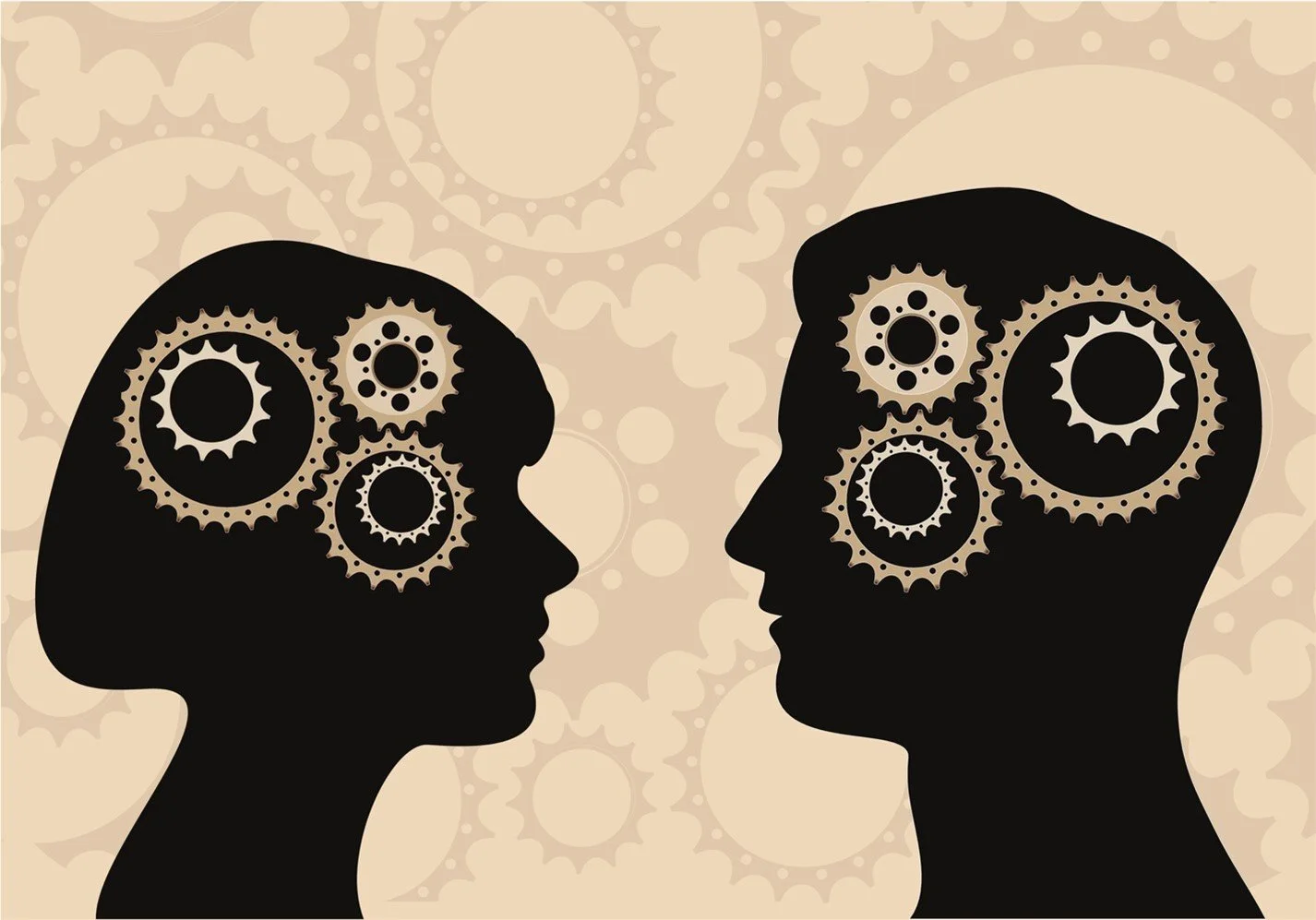
A cognitive assessment score is a number derived from performance on a set of specific tasks under specific conditions at a specific moment in time. Understanding what that number genuinely captures — and what it does not — is at least as important as understanding how it's calculated.
The Snapshot Problem
One of the most fundamental limitations of any cognitive assessment is its nature as a snapshot. A score represents how a person performed on a particular set of questions on a particular day. It does not represent a stable, immutable property of the person's mind. Research consistently demonstrates that IQ scores are influenced by factors that have nothing to do with underlying cognitive ability: sleep quality in the days before testing, current stress levels, nutritional state, test-related anxiety, familiarity with the format, and even ambient temperature in the testing room.
Test-retest reliability — how consistently a test produces similar scores for the same person across administrations — varies across instruments and populations. While professionally administered intelligence tests show reasonably high reliability in most research contexts (coefficients typically in the .85–.95 range), online assessments are considerably more variable. And even a highly reliable test can mask meaningful short-term fluctuation in actual cognitive performance.
The practical implication is significant: a single score, from a single administration, should not be treated as a definitive measure of anything. Multiple assessments across different conditions provide a far more honest picture, and even then the result reflects performance at those specific moments — not potential over a lifetime.
Cultural and Educational Bias
The relationship between intelligence tests and cultural context has been one of the most extensively debated issues in psychometrics for decades. The concern is not new. When early versions of American intelligence tests were administered to immigrant populations in the early twentieth century, the results were frequently used to draw sweeping conclusions about group-level differences in innate intelligence — conclusions that subsequent research has thoroughly discredited, but that caused genuine social harm at the time.
Contemporary tests are considerably more carefully designed, with attention to item fairness, statistical procedures for identifying differential item functioning across demographic groups, and updated normative samples. But cultural and educational influences on test performance have not been eliminated — they've been reduced and monitored more carefully.
Verbal comprehension subtests, which heavily reward vocabulary breadth and familiarity with academic language, are particularly sensitive to educational access and home language environment. Timed processing speed tasks may disadvantage test-takers who come from educational systems that don't emphasize time pressure, or those with performance anxiety in timed contexts. The challenge is that some of what looks like "cultural bias" may reflect genuine differences in cognitive environments — and disentangling the two is methodologically difficult.
Researchers like Claude Steele have documented "stereotype threat" — the measurable cognitive performance decrements that occur when individuals perform tasks in contexts where a negative stereotype about their group's ability is salient. This is a real effect with real implications for how test results are interpreted, particularly in cross-group comparisons.
What IQ Tests Don't Measure
Perhaps the most important limitation of IQ scores is simply the scope of what they do and don't include. A standard cognitive battery — even a comprehensive one — covers a relatively narrow slice of the full range of human cognitive and behavioral capacities.
Creativity, in its open-ended forms, is not well captured by conventional IQ tests. Divergent thinking — the ability to generate multiple, varied, and novel solutions to an open problem — shows only modest correlation with g. The kind of creative work that produces new ideas in science, art, or entrepreneurship involves components (openness to experience, tolerance for ambiguity, intrinsic motivation, domain-specific knowledge, persistence) that IQ tests are not designed to evaluate.
Practical intelligence — the ability to navigate real-world challenges, read social situations, and adapt to the specific demands of one's environment — is similarly underrepresented in standard assessments. Robert Sternberg's research on "tacit knowledge" found that this kind of practical wisdom showed limited correlation with IQ but meaningful correlation with professional success in various domains.
Emotional regulation, impulse control, and motivational orientation are not measured by cognitive assessments. Yet research on self-regulation — perhaps most famously represented in longitudinal studies of delay of gratification in children — consistently finds these capacities predict important life outcomes with effect sizes comparable to or exceeding those of cognitive ability measures.
Domain-specific expertise is also not what IQ tests are measuring. A master chess player, an expert nurse, an experienced musician — each has developed profound competencies in their domain that cannot be adequately captured by fluid reasoning subtests. The knowledge, pattern recognition, and strategic thinking built through deliberate practice are real cognitive achievements, but they are not what general cognitive assessments are designed to index.
"A test that covers six hours of your life cannot tell you the story of your mind."
The Predictive Validity Question
Defenders of IQ testing correctly point out that cognitive ability measures are among the strongest single predictors of academic and occupational outcomes in the research literature. This is not in dispute. Meta-analyses consistently report substantial correlations between cognitive ability and performance across educational settings and many job categories.
What matters for honest interpretation, however, is understanding what those correlations actually mean — and what they leave unexplained. A correlation of .50 between IQ and academic performance is substantial. It is also a statement that roughly 75% of the variance in academic outcomes is not explained by IQ. The remaining variance reflects factors that IQ tests don't capture: conscientiousness, study habits, quality of instruction, family support, economic stability, health, and many others.
Predictive validity also declines substantially as context becomes more specific. While cognitive ability predicts average performance across many people in many situations, it predicts any individual's performance in a specific role with much lower precision. Selection decisions based heavily or exclusively on cognitive test scores — in employment, education, or other high-stakes contexts — should account for this limitation explicitly.
The predictive validity of IQ scores for outcomes like life satisfaction, relationship quality, and subjective wellbeing is considerably weaker. These outcomes depend heavily on non-cognitive factors, and treating cognitive ability as a proxy for overall life prospects is both empirically unjustified and potentially harmful.
The Reification Problem
Reification — treating an abstract construct as if it were a concrete, tangible thing — is a persistent risk in popular discussions of IQ. When a score is presented as "your IQ" rather than "your performance on this test on this occasion," the language subtly transforms a measurement into an identity. This shift is consequential.
If a person believes that their IQ score represents a fixed, genetically determined ceiling on their cognitive capacity, they are less likely to persist through cognitive challenges, less likely to attribute struggles to factors that could be addressed, and more likely to interpret setbacks as confirmations of a predetermined limit. The research on growth mindset, associated with Carol Dweck's work, suggests that beliefs about the malleability of ability have real effects on cognitive performance and persistence — independent of actual initial ability levels.
This is not an argument against cognitive assessment. It is an argument for how results should be framed and communicated. A responsible assessment platform does not present scores as fixed identities. It presents them as performance data from a specific measurement event, with appropriate context about what influences scores, what they predict, and what they leave unexplained.
Specific Limitations of Online Assessments
Online cognitive assessments, including those offered on platforms like Zarmiquo, carry additional limitations beyond those inherent in standardized testing generally. It is worth being explicit about these.
Environmental standardization is largely absent in online testing. Participants complete assessments in varied lighting, noise, and comfort conditions, on different devices with different screen sizes, and with varying levels of distraction. These factors introduce measurement error that cannot be fully controlled or estimated.
Normative samples for online assessments are frequently less rigorously constructed than those behind clinical instruments. Self-selection effects — where curious, motivated individuals are more likely to seek out and complete online cognitive tests — can skew normative distributions in ways that make scores less accurate as population comparisons.
The absence of trained examiner oversight removes an important safeguard. Professional psychometric examiners can observe behavioral indicators of effort, anxiety, or response style that influence score interpretation. Without this, unusual patterns in online results may be harder to contextualize appropriately.
These limitations do not eliminate the value of online cognitive assessments for educational exploration and self-understanding. They do mean that results should be treated as indicative rather than definitive, and should never be used as substitutes for professional evaluation in any context where clinical accuracy matters.
Using Scores Responsibly
An IQ score, interpreted thoughtfully and in context, can be a useful piece of self-knowledge. Understanding how you perform relative to normed expectations on reasoning tasks, pattern recognition, or working memory can illuminate something real about your current cognitive profile. That information is worth having.
What it cannot do is tell you who you are, what you're capable of becoming, or how your life will unfold. The history of cognitive assessment is littered with overconfident predictions that didn't survive contact with the complexity of actual human lives. The tools have improved substantially — but the complexity hasn't diminished.
Use the score as one data point among many. Pay attention to the domain-level breakdown, not just the composite. Ask what the test didn't cover. And treat the result as an invitation to explore further, not a verdict to accept.
This article reflects published research findings and is intended to support informed, responsible engagement with cognitive assessment tools. It does not constitute clinical advice.